
Perception for Intelligent Systems | percins


How can we enable robots to interpret their surroundings with the reliability and precision required for safer and more intelligent operation? At percins, we address this question by developing perception approaches for robots and human-aware systems.
Our research continuously evolves to meet the challenges of future environments through a diverse range of topics. In the field of robotic gas sensing, we design systems for environmental monitoring and emergency response. We also enhance the autonomy of mobile robots within modern intralogistics, specializing in robust radar-based navigation. Furthermore, we explore the perception of human characteristics to foster intuitive human-robot interaction and leverage eye-tracking technologies to evaluate cognitive processes, such as in the evaluation of skills mathematical education.
Our Research

Robotic Gas Sensing
We enable mobile robots to smell by detecting and localizing hazardous gases. Our work spans modern sensing technologies and source localization algorithms for robotic platforms ranging from ground rovers to aerial drones.

Spatial Human-Robot Interaction
We investigate how robots can perceive and interpret their dynamic environment, communicate and understand intentions. This enables safe, intuitive and trustworthy human-robot collaboration.

Perception for Intelligent Mobile Robots
Robust robotic perception is key to safe operation in intralogistics environments. To this end, we work on long-term autonomy through fault awareness, robust localization, and radar-based navigation.
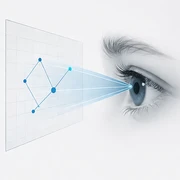
Eye Tracking and AI-Based Support Systems
Eye tracking turns “where we look” into measurable data. Using artificial intelligence, we reveal cognitive processes such as learning behavior and develop adaptive learning support systems.
Join Our Team
Interested in contributing to our research? We offer different opportunities for student assistants (HiWi), Bachelor's and Master's thesis projects, and doctoral research.